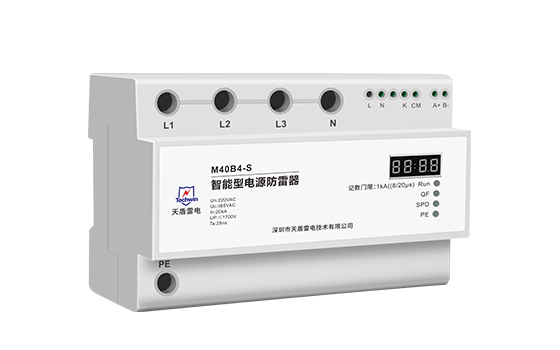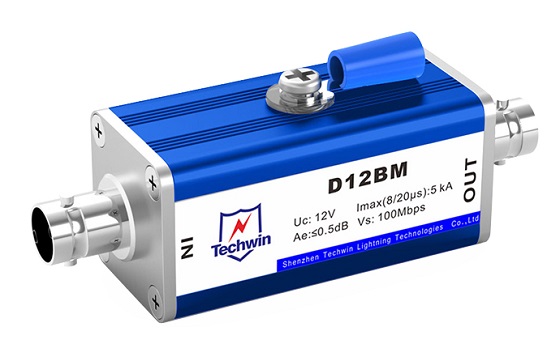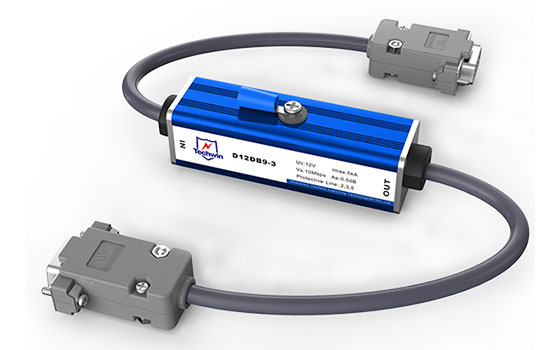

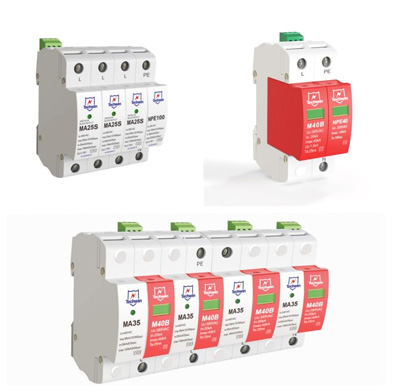
Surge Protective Devices (SPDs) are designed to protect electrical and electronic equipment from voltage spikes or surges. The three main types of SPDs are voltage-limiting type, switching type, and composite type. Each type has its own characteristics and practical applications:
Characteristics:
Operates by limiting the voltage across the protected equipment.
Diverts excess voltage to the ground to maintain a safe voltage level.
Typically uses components like metal oxide varistors (MOVs) to absorb and dissipate excess voltage.
Practical Applications:
This low voltage surge arrester is well-suited for protecting sensitive electronic equipment, such as computers, servers, and other devices with low voltage tolerance.
Commonly used in areas where a constant and stable power supply is crucial.
Ideal for locations with relatively stable power conditions, providing continuous protection against voltage spikes.
Characteristics:
Operates by switching between an open and closed state in response to surge conditions.
Allows current to flow only when a surge is detected, preventing continuous exposure to the protected equipment.
Often uses components like gas discharge tubes (GDTs) or thyristors for switching.
Practical Applications:
Effective in environments where surges are intermittent, and equipment can tolerate brief interruptions in power.
Commonly used in situations where low standby power consumption is critical, as it doesn't draw power during normal conditions.
Suitable for applications where there is a known history of occasional surges.
Characteristics:
Combines features of both voltage-limiting and switching technologies.
Offers continuous protection by limiting voltage and provides additional switching capability for surge events.
Typically incorporates a combination of MOVs, GDTs, or other components.
Practical Applications:
Provides a balanced approach to surge protection, offering both continuous and event-specific protection.
Suitable for a wide range of applications, offering versatility in surge protection strategies.
Often used in critical systems or areas where a combination of protection mechanisms is desired for comprehensive coverage.
In summary, the choice between voltage-limiting, switching, or composite type SPD depends on the specific characteristics of the electrical environment and the requirements of the equipment to be protected. The decision should take into account factors such as the sensitivity of the equipment, the nature of the power supply, and the frequency and magnitude of potential surge events in the area. Consulting with electrical professionals or engineers is crucial for a thorough assessment and selection of the most appropriate surge protection solution.
 Choosing The Right Lightning Protection Device For Building ResilienceJanuary 10, 2024Ensuring the safety and resilience of buildings against lightning strikes is a paramount consideration in structural design and risk management. The choice of a lightning protection device for buildin...viewPrinciples and Performance Parameters Determination, as well as Installation Regulations of Surge ProtectorsMarch 13, 2023Surge protection device, also known as SPD, is an electronic device that offers safe protection for various electronic equipment, instruments, and communication lines. It is used to limit transient ov...viewDo surge protectors protect against lightning?November 28, 2023In the realm of electronic device protection, surge protectors often take center stage. Many homeowners invest in these devices to shield their gadgets from power surges caused by various factors. How...viewTechnical terminology in IEC61643 standards-2December 8, 20212.1.20 Reference Voltage UrefIn the area where the volt-ampere characteristics of the metal oxide resistor will transition from the weak electric field area to the strong electric field area, a suitab...viewTypes And Uses of Surge ProtectorsAugust 30, 20211. Types of Surge ProtectorsBased on working principle, surge protectors can be divided into voltage switch type, voltage limiting type and combined type.(1) Voltage switch surge protector. High imped...viewBenefits of Using Lightning Protection DevicesMarch 1, 2024In today's fast-paced world, where technology reigns supreme, the importance of protecting our electronic devices from potential damage caused by lightning strikes cannot be understated. This is w...view
 EN
EN
 jp
jp  ko
ko  fr
fr  de
de  es
es  it
it  ru
ru  pt
pt  ar
ar  vi
vi  th
th  ro
ro  bg
bg  nl
nl