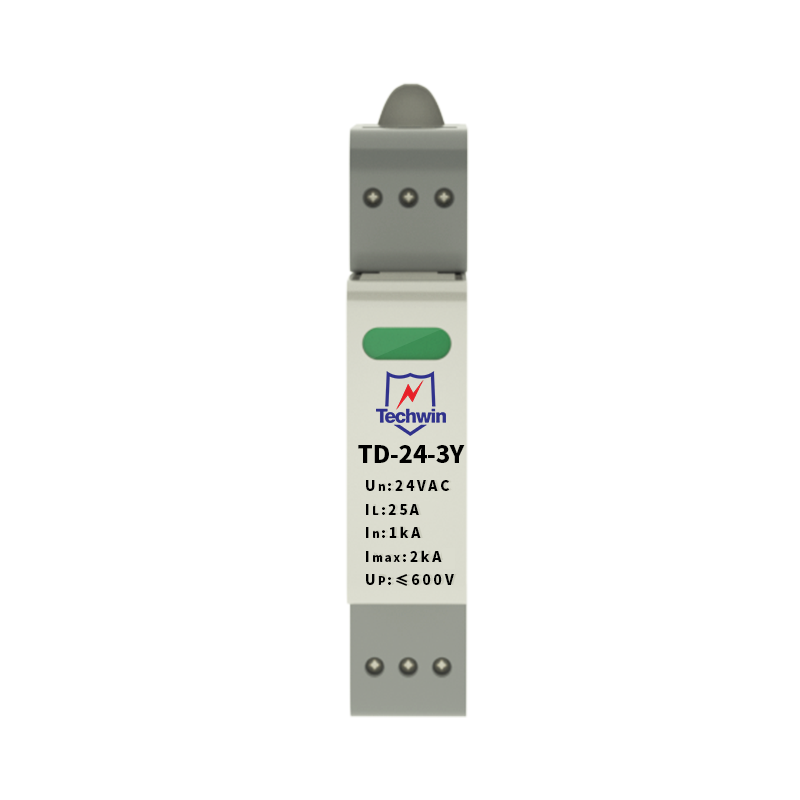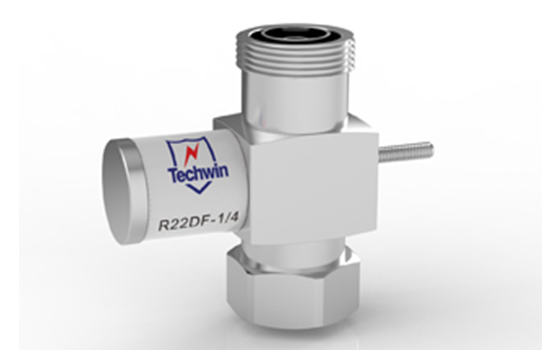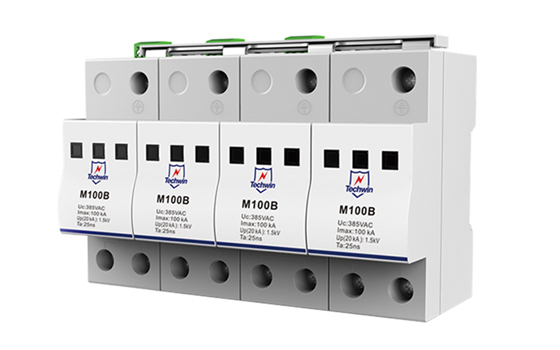

The surge current energy generated by lightning strikes is enormous, so a step-by-step release approach should be adopted to release the surge current into the ground in stages.
The first level of protection is mainly to directly discharge the thundering current through the lightning arrester when lightning strikes. Therefore, in the power distribution network, places, where direct lightning strikes may occur, must be protected by level I lightning protection.
The second level of lightning arrester is aimed at absorbing and reducing the residual voltage generated by the first level of lightning protection. After a large amount of energy is released by the first level during a thunderstorm, there are still residual surge voltages, which can still exert electrical shock pressure on equipment after being transmitted along the line. Therefore, a second-level lightning arrester is needed to further absorb it.
The third level lightning arrester is for protecting against electromagnetic radiation induced by residual lightning strikes after the second level lightning protection and residual lightning strike energy passing through the second level lightning arrester.
(1) First-level protection
SPD surge protector aims to limit the surge voltage to between 2500V and 3000V. In practical engineering, this level of surge protector mainly withstands lightning and discharges a large amount of surge current into the ground.
(2) Second-level protection
SPD surge protector aims to limit the residual surge voltage after the first level of protection to between 1500V and 2000V. All electrical equipment in lightning protection zone LPZ1-LPZ2 should be implemented with equipotential connections. Generally, when the lightning protection level of a user's equipment reaches level II, it can basically ensure the lightning safety protection requirements of electrical equipment.
(3) Third-level protection
This level of protection provided by lightning surge protection devices aims to be the ultimate means of protecting equipment, and the residual lightning surge voltage must be limited to below 1000V.
(4) Fourth-level and above protection
According to the requirements of lightning protection regulations, when the lightning protection level is at level II, the residual lightning surge should be limited below the equipment's withstand voltage level. If the equipment's voltage withstands level is low, it may require are fourth-level or even higher-level lightning protection. The lightning withstands capacity of fourth-level lightning protection should not be less than 5KA.
(1) Different equipment voltage levels
Lightning arresters are widely used from 0.4kV to 500kV ultra-high voltage, while SPD surge protectors are mainly used for equipment below 1KV.
(2) Different protected objects
Lightning arresters are commonly used to protect power distribution electrical equipment, while surge protectors are mainly used for secondary signal circuits and electronic instruments.
(3) Different insulation levels and voltage withstand levels
Lightning arresters mainly protect power distribution electrical equipment, while surge protective equipment, including signal surge protectors, mainly protect signal circuits and electronic equipment. The voltage withstand levels of power distribution electrical equipment and signal circuits and weak electronic signal equipment are not of the same order of magnitude, so the protection residual voltage of lightning arresters and surge protectors should correspond to the withstand voltage level of the protected equipment.
(4) Different installation positions
Lightning arresters are generally installed on the primary line of power distribution to block direct invasion of lightning waves and effectively protect the overhead lines and transformers of the incoming line. Surge protectors are used for weak electrical signal circuits or end electronic equipment in the secondary system as a supplementary measure to limit and divert the residual voltage after lightning waves have directly invaded. Therefore, lightning arresters are installed at the outdoor power supply inlet, while SPD surge protectors are used for indoor electronic equipment and instruments.
(5) Different current-carrying capacities
Lightning arrester mainly plays the role of being the first-level equipment to discharge lightning current into the ground when lightning strikes, so the current-carrying capacity requirement is very large. However, the insulation level of weak electrical signal circuits and electronic control equipment such as instruments is far lower than the voltage withstand level of the power inlet of power distribution electrical equipment. Therefore, the current-carrying capacity of SPD surge protectors is generally not large, and their selection is based on the residual pressure of the front-level lightning arrester.
 Will a surge protector still work after a power failure? –Comprehensive Technical AnalysisApril 27, 2025Systematic maintenance ensures SPD reliability post-power failure.viewHow does A Surge Protective Device ( SPD ) work?April 16, 2025A Surge Protective Device (SPD) is designed to protect electrical systems and equipment from voltage spikes or surges. These surges can occur due to lightning strikes, power outages, or switching even...viewView of beautiful waterfall in Maluan Mountain in autumnOctober 21, 2022In order to enrich the cultural life of employees, under the organization of the Administration Department, We established "Techwin Outdoor Activities Team" mean to our employees to w...viewPrinciple and Function of Signal Surge Protective DeviceMarch 18, 2025Working Principle of Signal Surge Protective DevicesSignal surge protective devices form a protective barrier by connecting in series between the signal channels and the equipment. When a surge voltag...viewHow do SPDs work?March 3, 2023SPD stands for Surge Protective Device, which is a device that is designed to protect electrical and electronic equipment from voltage surges and transients. Here is a brief explanation of how SPDs wo...viewTerms and definitions of IEC 61643-11: LOW-VOLTAGE SURGE PROTECTIVE DEVICES (1/2)December 8, 2022The professional explanation of the main terms of surge protective devicesview
 EN
EN
 jp
jp  ko
ko  fr
fr  de
de  es
es  it
it  ru
ru  pt
pt  ar
ar  vi
vi  th
th  ro
ro  bg
bg  nl
nl