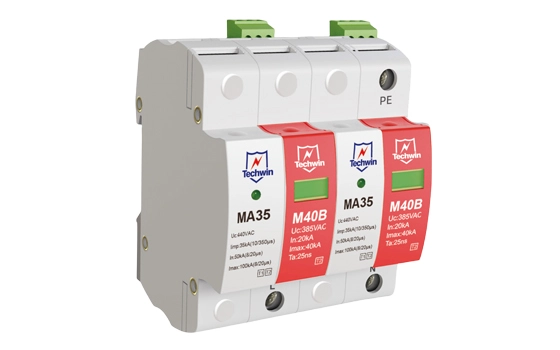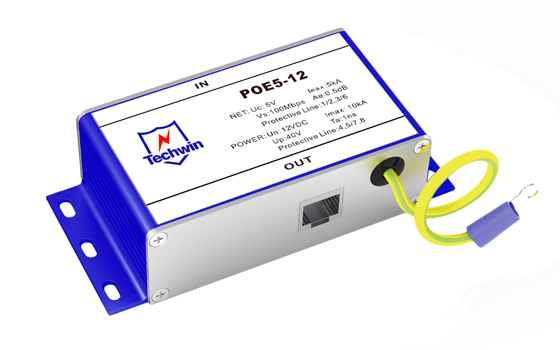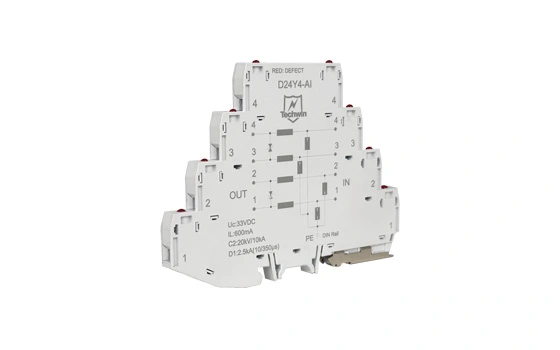

In the intricate landscape of power management, Surge Protection Devices (SPDs) for power supply stand out as cost-effective guardians, ensuring stability without breaking the budget. This passage delves into the economic advantages of incorporating SPDs into power systems, emphasizing their role in preventing costly equipment damage, extending the lifespan of electronics, and minimizing operational downtime.
Investing in the SPD for power supply is a prudent strategy to prevent expensive equipment damage caused by voltage spikes and power surges. These devices act as a first line of defense, intercepting harmful electrical anomalies before they reach connected electronics. The financial implications of replacing or repairing damaged equipment far exceed the initial investment in surge protection. SPDs function as a cost-effective insurance policy, shielding electronic devices and systems from potential irreparable harm.
SPDs for power supply contribute to a cost-effective power strategy by extending the lifespan of electronic devices. The protection they provide against voltage spikes and surges prevents premature wear and tear on sensitive equipment. By reducing the frequency of replacements, SPDs offer long-term cost savings. This makes them a judicious investment for individuals and businesses alike, aligning budget constraints with the goal of maximizing the usability of electronic devices.
Operational downtime can have substantial financial implications for businesses. When electronic equipment fails due to power surges, it not only incurs repair or replacement costs but also leads to productivity losses during downtime. SPDs for power supply act as strategic tools to prevent these disruptions. By ensuring a stable power supply, they minimize the risk of operational downtime, indirectly contributing to cost savings associated with uninterrupted operations.
The SPD manufacturer offers a range of SPDs for power supply designed to cater to different budgets and requirements. Whether for residential, commercial, or industrial applications, there are cost-effective SPD options that provide essential protection without straining financial resources. This flexibility allows consumers and businesses to choose SPDs tailored to their specific needs, ensuring a customized and budget-friendly approach to power management.
SPDs for power supply, especially those equipped with advanced features like energy management and voltage optimization, contribute to overall energy efficiency. The cost savings achieved through reduced energy consumption further enhance the economic rationale for investing in these devices. By aligning with broader energy efficiency initiatives, SPDs become integral components of a cost-effective and sustainable power strategy.
Budgeting for stability in power management involves strategic investments that yield long-term cost savings and operational resilience. Surge Protection Devices for power supply emerge as key players in this cost-effective approach, offering protection against equipment damage, extending the lifespan of electronics, and minimizing operational downtime. As technology advances, integrating SPDs into power systems becomes not just a protective measure but a prudent financial decision. By recognizing the economic rationality of surge protection, individuals and businesses can navigate the evolving landscape of power management with confidence, ensuring stability without compromising their budgets. SPDs for power supply stand as a testament to the synergy between financial prudence and the pursuit of a reliable and resilient power infrastructure.
 What is a Surge Protector?October 25, 20211. Surge protectorA surge protector is a small electrical device with two functions. The first function is to allow multiple components to be plugged into the same power outlet. The second function, w...viewThe Difference Between Surge Protector and Lightning ArresterFebruary 17, 2023Lightning arresters and surge protective devices, as commonly used components in electrical equipment, have the function of preventing overvoltage, especially lightning overvoltage, but there are stil...viewThe Difference of Voltage Switching SPD and Voltage Limiting SPDFebruary 17, 2023Voltage switching SPDs are designed to switch between two states, an "off" state and an "on" state, based on the voltage level. When the voltage level is below a certain threshold,...viewSurge Protector SPD Selection CriteriaMay 20, 2022The surge protector is divided into three levels according to the area that needs to be protected. The first level surge protector can be applied to the main power distribution cabinet in the building...viewDo every inverter has a surge protector? Where to install the surge protector in the PV system?June 5, 2025Inverter is indispensable in a PV system. But not every inverter is equipped with a surge protector. Some newer and more advanced inverter models have built-in surge protection as a standard feature, ...viewWhat is the Difference Between a Class 1 Lightning Surge Protector and a Class 2?November 9, 2021Since the energy of lightning strikes is very huge, it is necessary to gradually discharge the energy of lightning strikes to the ground through a hierarchical discharge method. The first-level lightn...view
 EN
EN
 jp
jp  ko
ko  fr
fr  de
de  es
es  it
it  ru
ru  pt
pt  ar
ar  vi
vi  th
th  ro
ro  bg
bg  nl
nl