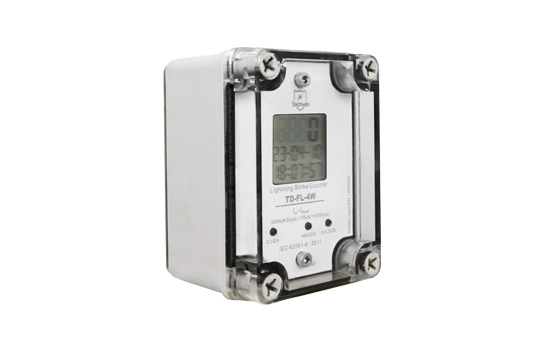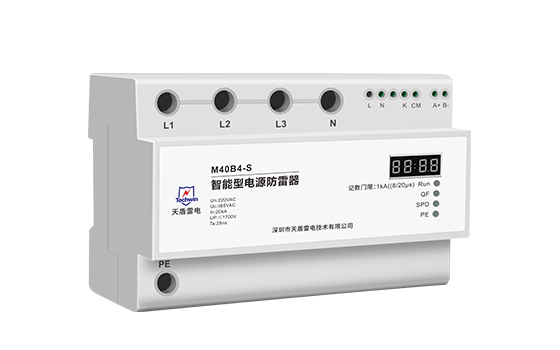

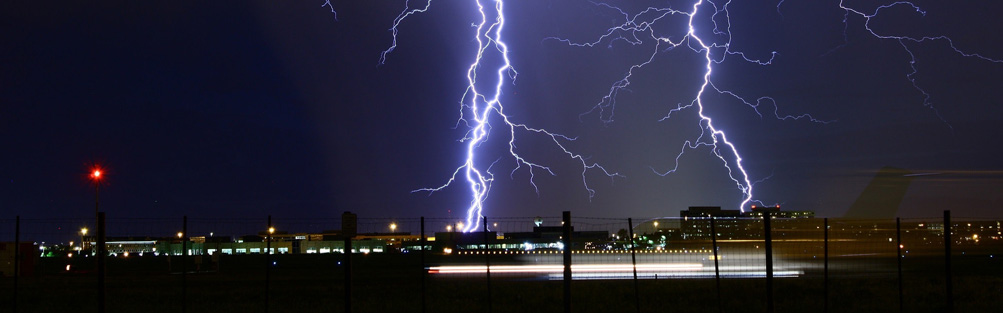
A Surge Protective Device (SPD) is designed to protect electrical systems and equipment from voltage spikes or surges. These surges can occur due to lightning strikes, power outages, or switching events within the power grid. SPDs act as a barrier to divert or absorb excessive voltage, preventing damage to sensitive equipment.
Here's how they work:
1. Detection of Surges: When there’s a sudden increase in voltage (a surge), the SPD detects it almost instantly. This surge could come from external sources like a lightning strike or internal sources like power switching.
2. Clamping or Diverting the Surge: SPDs use components like metal oxide varistors (MOVs), gas discharge tubes (GDTs), or transient voltage suppression diodes (TVS). These components are designed to conduct current only when the voltage exceeds a certain threshold. When a surge occurs, they "clamp" the voltage by conducting the excess voltage away from the protected equipment.
3. Dissipation: Once the surge is diverted, the SPD safely dissipates the excess energy, typically in the form of heat, or redirects it into the ground (depending on the type of SPD).
4. Returning to Normal Operation: After the surge has passed, the SPD returns to its normal, non-conducting state, allowing regular voltage to flow through the system again.
There are different types of SPDs, including whole-house models, which protect an entire electrical system, and point-of-use models, which protect specific devices. The effectiveness of an SPD is determined by its voltage clamping level, surge current rating, and response time.
SPDs are important for sensitive equipment like computers, servers, HVAC systems, and even home appliances, as surges can damage internal components.
 Selection Principle of Surge Protector in Distribution BoxJune 20, 2022(1) The voltage protection level Up of SPD should always be less than the impulse withstand voltage Uc of the protected equipment, and greater than the maximum operating voltage Us of the power grid o...viewMaximizing Equipment Lifespan: Power Surge Monitoring for Industrial ApplicationsSeptember 11, 2023In industrial settings, where complex machinery and electronic equipment are the backbone of operations, ensuring the longevity and reliability of these assets is of paramount importance. Industrial e...viewHarm of lightning to DCS system of nuclear power plant and key points of lightning protection designJuly 8, 2022Lightning is a kind of meteorological disaster that often occurs in most areas of our country. It has the characteristics of strong suddenness and great harm, and often brings very serious threats to ...viewWhat Is a Transient Voltage Surge Suppressor (TVSS)?June 26, 2024Transient Voltage Surge Suppressor (TVSS) is a device used to protect electronic equipment from transient overvoltage, spikes, or surges. With the increasing reliance on network infrastructure due to ...viewIntegrated Lightning Protection Solution: Surge Protector for CCTV CameraJune 26, 2024CCTV video surveillance systems can be used for CCTV video surveillance systems. To ensure that the CCTV video surveillance system can operate continuously and stably, it is essential to integrate lig...viewWhich instruments and meters need to be equipped with lightning protection modules?October 25, 2021Which instruments and meters need to be equipped with lightning protection modules?Instruments and meters often encounter unexpected voltage transients and surges during use, which can cause damage to...view
 EN
EN
 jp
jp  ko
ko  fr
fr  de
de  es
es  it
it  ru
ru  pt
pt  ar
ar  vi
vi  th
th  ro
ro  bg
bg  nl
nl