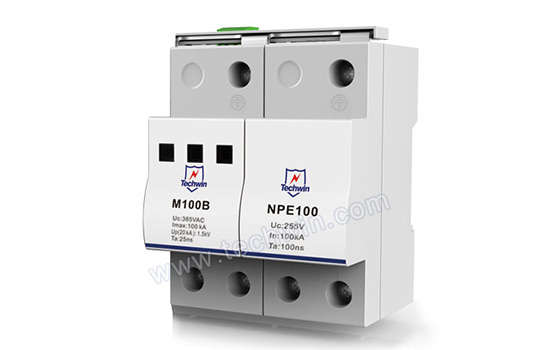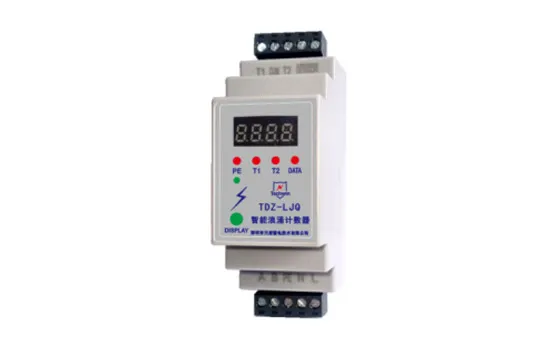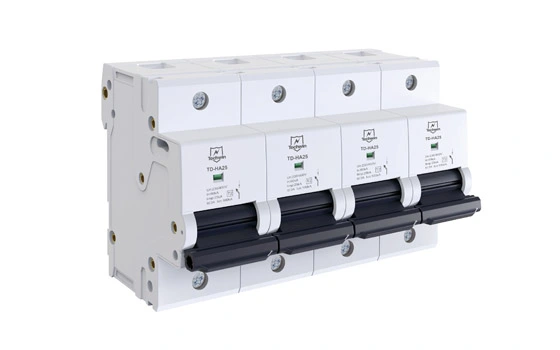

Signal surge protector (SPD) can be divided into telephone signal surge protector, network signal surge protector, control signal surge protector, high-power broadcast signal surge protector, and monitoring signal surge protector according to the different protected lines. Surge protector, video signal surge protector, etc. Today, Techwin will share with you the "Structure and Circuit Design of Signal Surge Protector".
The telephone line is a symmetrical double line, which can also be regarded as a parallel line. Its working power supply has a DC voltage of 48V, a voltage of 90V during ringing, and an operating frequency of 64kbits/s. Therefore, the surge protector used on this line should be The DC operating voltage is greater than 190V but less than 260V, and the impulse breakdown voltage is less than 700V. Therefore, it is generally required that the surge protector can also withstand a lightning strike voltage of 4kV and a lightning strike current of more than 5kA.
RS232 communication lines are generally divided into several types: one is the direct connection of the 25-pin cable line; the other is the direct connection of the twisted pair; the other is to add a modem at both ends of the twisted pair, and then convert it into a 25-pin cable. . There are also RS232 boards with 15-pin and 9-pin connectors. Different protection modes can be used for different communication line modes. Since the working voltage of the RS232 interface is below 15V and the transmission rate is hundreds of kbits/s, the insertion loss within the working frequency range is not greater than 1dB, so the parameter selection of the RS232 industrial surge protector should be determined when the DC clamping voltage is not Less than 15V, the impulse clamping voltage is not more than 26V, the transmission rate is not less than 1Mkbits/s, the withstand voltage is not less than 1.5kV, and the lightning current capacity is not less than 3kA.
The RS485 communication line has a 9-pin cable line connection method, but more is a twisted pair connection method. For different communication line methods, different protection modes can be used. Since the operating voltage of the RS485 interface is below 12V, the transmission rate is 100kbits/s, and the insertion loss within the operating frequency range is not greater than 1dB, so for the parameters of the RS485 interface surge protector module: DC clamping voltage not less than 12V, impulse clamping voltage It is not more than 22V, the transmission rate is not less than 1Mkbits/s, the withstand voltage is not less than 1.5kV, and the lightning current capability is not less than 3kA.
The 2Mkbits/s interface line types of E1 include twisted pair type, coaxial type and RJ45 network cable type, but in essence they all have one loop for receiving and sending. The signal level of the E1 dedicated line is generally not greater than 3V, and the transmission rate is 2047kbits/s. Therefore, the parameter selection of the surge protector of the E1 interface should be determined when the DC clamping voltage is not greater than 5V, the impulse clamping voltage is not greater than 20V, and the transmission The rate is not less than 2Mkbits/s, the insertion loss is not more than 1dB in the operating frequency range, the withstand voltage is not less than 1.5kV, and the lightning current resistance capability is not less than 5kA.
Ordinary coaxial interface surge protector, such as BNC interface type, has two circuits, one is to use the outer skin as the ground, and only consider the protection of the core wire to the outer skin; the other is that the outer skin is not directly grounded, the surge protector In addition to considering the protection of the core wire to the outer skin, the module also has the protection of the outer skin to the ground. Since the lightning impulse energy on the communication line is not very large, this kind of surge protector does not require high lightning current capability. Generally, the lightning resistance current of 10kA is enough. However, due to the high communication frequency band, the requirements for attenuation and standing wave ratio are relatively high. , it is generally required that the insertion loss of the working frequency band is not greater than 0.2dB, and the standing wave ratio is not greater than 1.1.
 Technical terminology in IEC61643 standards-1December 8, 20212.1 Technical Term2.1.1. Lightning electromagnetic impulse (LEMP)It is a source of interference. Refers to the effect caused by lightning directly hitting the lightning protection device of a building...viewDo Surge Protectors Stop Electrical Fires?May 14, 2025Surge protectors (SPDs) can effectively reduce the risk of electrical fires caused by surges when designed, installed and maintained in accordance with international standards (such as the IEC 61643 s...viewHow Long is the Service Life of the Power Surge Protector SPD?February 17, 2023The internal components of the power surge protector SPD, such as gas discharge tubes, varistors, transient suppression diodes, etc., will have a certain impact on the performance when subjected to cu...viewPC power supplies have built-in surge protection or not ? TECHWIN provides indispensable protectionMay 8, 2025PC power supplies (PSUs) typically include basic surge protection, but they are not designed to handle large power surges (e.g., lightning strikes or grid fluctuations) effectively. Here’s how Shenzh...viewEmerging Trends in Signal Surge Protector TechnologyFebruary 29, 2024As technology continues its relentless evolution, the realm of signal surge protectors is undergoing transformative changes. The surge protection landscape is witnessing innovative advancements driven...viewSurge Protector: Safeguarding Your Devices from Power FluctuationsJanuary 5, 2024The Vulnerability of Electronic DevicesIn the digital age, our lives are intricately woven with electronic devices, from smartphones to laptops and everything in between. However, these devices are no...view
 EN
EN
 jp
jp  ko
ko  fr
fr  de
de  es
es  it
it  ru
ru  pt
pt  ar
ar  vi
vi  th
th  ro
ro  bg
bg  nl
nl