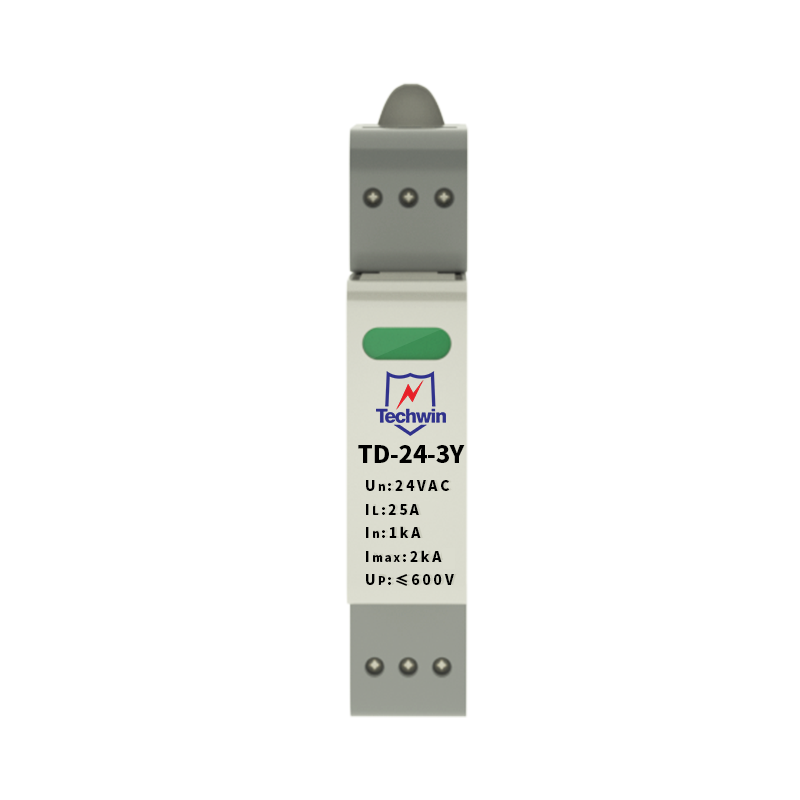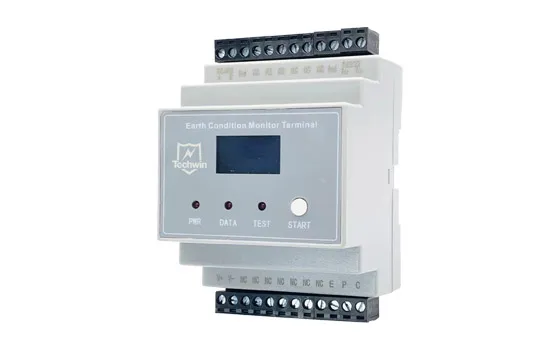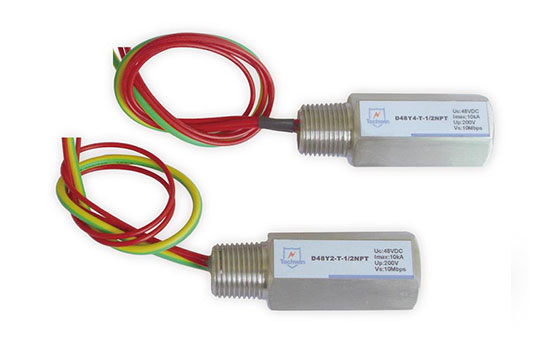

A Surge Protective Device (SPD) is a critical component designed to safeguard electrical systems and equipment from voltage surges caused by lightning strikes, power grid fluctuations, or switching transients. SPDs divert excess voltage to the ground, clamping the voltage to a safe level and preventing damage to connected devices.
1. Components:
Metal Oxide Varistors (MOVs): Voltage-dependent resistors that clamp surges.
Gas Discharge Tubes (GDTs): Ionize to create a low-resistance path during surges.
Transient Voltage Suppression (TVS) Diodes: Fast-acting components for sensitive electronics.
Types:
Type 1 (Service Entrance): Installed at the main electrical panel to handle large external surges (e.g., lightning).
Type 2 (Distribution Panels): Used in subpanels to protect against residual surges and switching transients.
Type 3 (Point-of-Use): Installed near sensitive devices (e.g., outlets) for localized protection.
1. Selection:
Choose the SPD type based on location (Type 1 for main panels, Type 2 for subpanels, Type 3 for outlets).
2. Ensure compatibility with system voltage (e.g., 120/240V single-phase, 480V three-phase).
Safety Precautions:
1. Turn off power at the main breaker before installation.
2. Use appropriate personal protective equipment (PPE).
3. Mounting:
Type 1/2: Mount on a DIN rail or enclosure near the electrical panel.
Type 3: Install directly at outlets or within power strips.
4. Wiring:
Single-Phase: Connect line (L) and neutral (N) conductors to the SPD terminals, then ground (PE) to the grounding bus.
Three-Phase: Connect all phases (L1, L2, L3), neutral, and ground.
Use short, straight conductors (≤0.5m) to minimize impedance. Follow manufacturer guidelines for wire sizing (e.g., 10 AWG).
5. Grounding:
Ensure a low-impedance path to the grounding electrode system.
Bond all grounding points to prevent potential differences.
6. Cascaded Protection:
Combine Type 1 (main panel), Type 2 (subpanels), and Type 3 (outlets) for layered defense.
7. Compliance:
Adhere to standards like NEC Article 285 (North America) or IEC 61643 (international).
Indicators: Check LED status lights regularly to confirm functionality.
Replacement: Replace SPDs after major surges or when indicators signal end-of-life.
Inspection: Periodically inspect for physical damage or degradation, even without surges.
Common Mistakes to Avoid:
Using overly long grounding wires.
Mixing SPD types improperly (e.g., installing Type 3 at a main panel).
Ignoring coordination between SPDs in cascaded systems.
By following these guidelines, SPDs effectively mitigate surge risks, ensuring prolonged equipment lifespan and system reliability. Always consult spd manufacturer instructions and local codes for precise installation details.
 Photovoltaic Power Generation Systems and Lightning Protection Measures for Photovoltaic SPDJune 26, 2024Since the main components of the solar photovoltaic power generation system are outdoors, they are prone to lightning strikes or high-voltage surge induction, causing equipment damage. This article wi...viewFactors Affecting the Price of the Lighthning Surge ProtectorSeptember 18, 2021Due to different levels of protection, performance and parameters, each lightning protection power protector manufacturers' products have different levels of research and development costs, input ...viewTechnical terminology in IEC61643 standards-1December 8, 20212.1 Technical Term2.1.1. Lightning electromagnetic impulse (LEMP)It is a source of interference. Refers to the effect caused by lightning directly hitting the lightning protection device of a building...viewHow to Select Lightning-Proof Surge Protectors for Buildings?March 18, 2025In the lightning protection of a building's power supply, a lightning-proof surge protector safeguards equipment by discharging lightning currents and limiting surge voltages. It is the main means...viewSelection of Power SPD Surge Protection DeviceFebruary 1, 20231. Discharge current of power surge protection deviceThe discharge current is the most important parameter for selecting a surge protector, which symbolizes the ability of the surge protector to disch...viewWhat Is a Surge Circuit Breaker?June 26, 2024Surge Circuit Breaker, also known as SCB, is a new type of product used to replace traditional dedicated circuit breakers or fuses. It is specially designed for surge current protection, addressing th...view
 EN
EN
 jp
jp  ko
ko  fr
fr  de
de  es
es  it
it  ru
ru  pt
pt  ar
ar  vi
vi  th
th  ro
ro  bg
bg  nl
nl